A website dedicated to information on Fontan circulation failure and the ASMA-F device.
Welcome
The purpose of this website is to inform you, and those close to you, about:
Your medical condition: Fontan circulation failure.
The available treatments and their limitations.
The ASMA-F device, how it works, its expected benefits and its risks.
Your rights as a patient and the steps of your care.
Understanding my Fontan circulation and its failure
You were born with a heart defect.
A normal heart contains two pumps: one sends blood to the lungs, the other to the rest of the body. You were born with an anatomically or functionally single heart.
When you were a child, you had several operations. The surgeons connected the large veins of your body directly to the arteries of your lungs: this is what is called the Fontan circulation.
Your single pump sends blood to the rest of the body. Blood flows through the lungs on its own, pushed by the pressure that remains in your veins.
Why is my condition getting worse?
This circulation can work for years. But over time, the system wears out.
Pressure rises in your veins, blood stagnates and backs up into your organs: the liver, the kidneys and the intestine. At the same time, less blood reaches your lungs, so your body receives less oxygen.
This is what doctors call Fontan circulation failure.
What are the symptoms?
The most common symptoms include:
Swelling (edema): water retention, especially in the legs.
Swollen abdomen: caused by a build-up of fluid in the abdomen (ascites).
Shortness of breath: even at rest or with minimal exertion.
Loss of appetite, nausea or vomiting: related to congestion of the kidneys, liver and intestine.
A marked drop in your energy and physical performance.
Bluish lips or nails: a sign of a lack of oxygen.
Current treatments and their limitations
Several options exist to manage Fontan circulation failure.
Your medical team, commonly called the “Heart Team” (made up of cardiac surgeons, intensive care anesthesiologists and interventional cardiologists), has assessed that these treatments are not sufficient or not suitable in your case. Here is an overview of the available solutions and their limitations.
Drug treatments
You are already taking the usual heart failure medications (for example diuretics, which reduce the build-up of fluid in the body).
They remain useful, but they are no longer enough to relieve you.
Open-heart surgery (transplant or conventional cardiac assist)
Open-heart surgery could be considered, for a transplant or to implant a conventional cardiac assist device.
For some patients, heart transplantation and conventional surgical cardiac assist can prove too dangerous, in particular if your chest has already been opened several times, if your disease is at an advanced stage, and if other health problems add to the existing risk (respiratory failure, cancer…).
Existing heart pumps
The heart pumps available today do not solve your problem, because they were not designed for the low pressures of the right heart and of the Fontan circulation. They help the heart send blood to the body at high pressures.
What you need is a pump that sends blood to the lungs at low pressures.
ECMO (external circulatory support)
ECMO is a machine placed outside the body that takes over the circulation of the blood.
It is very helpful, but only for a few days or a few weeks. You have to stay in hospital the whole time, connected to the machine and unable to get up.
The ASMA-F device
The ASMA-F device is a cardiac assist system developed by BRIGHTFLOW. It is designed to push blood into the arteries of the lungs.
By improving pulmonary circulation, it could lower the pressure in your veins and reduce some of the symptoms related to Fontan circulation failure.
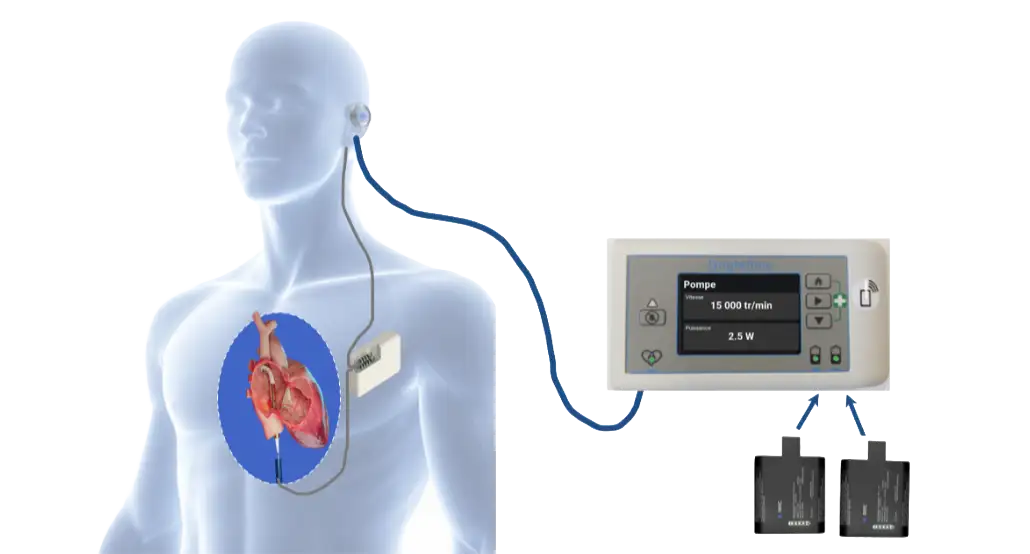
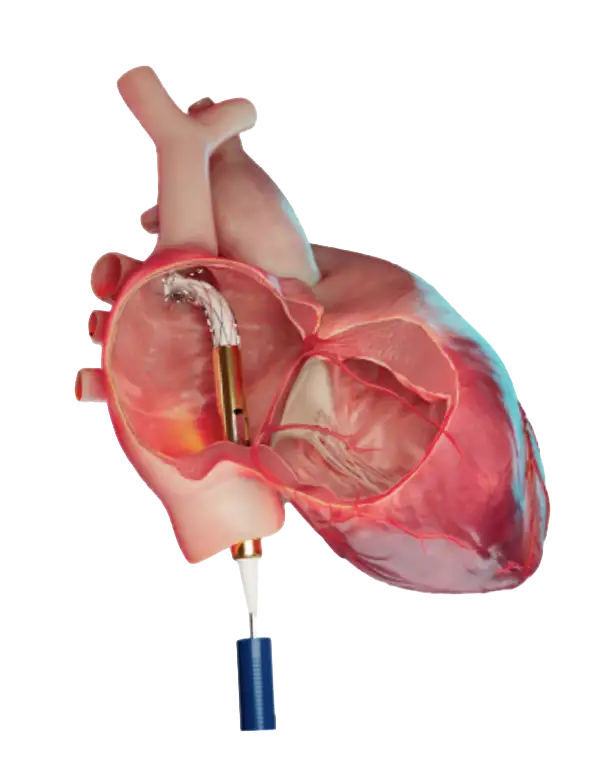
Figure 1: ASMA-F – Implanted system and external charging system
What does the device look like?
The ASMA-F system consists of:
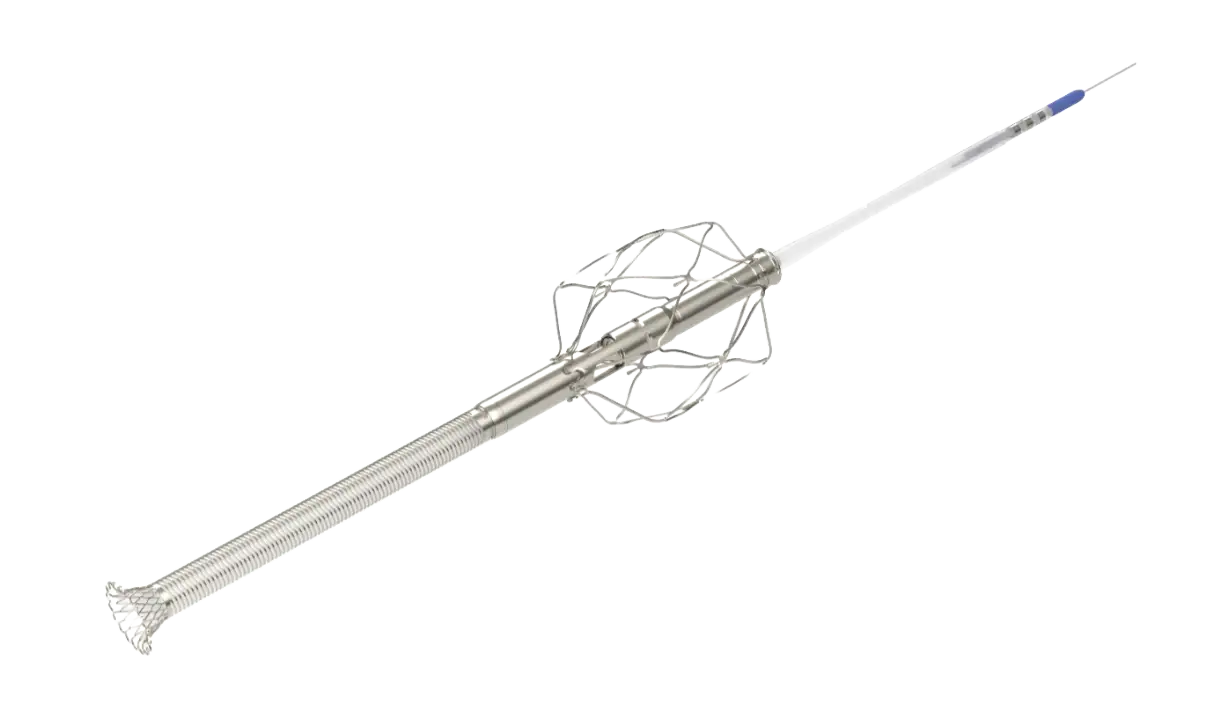
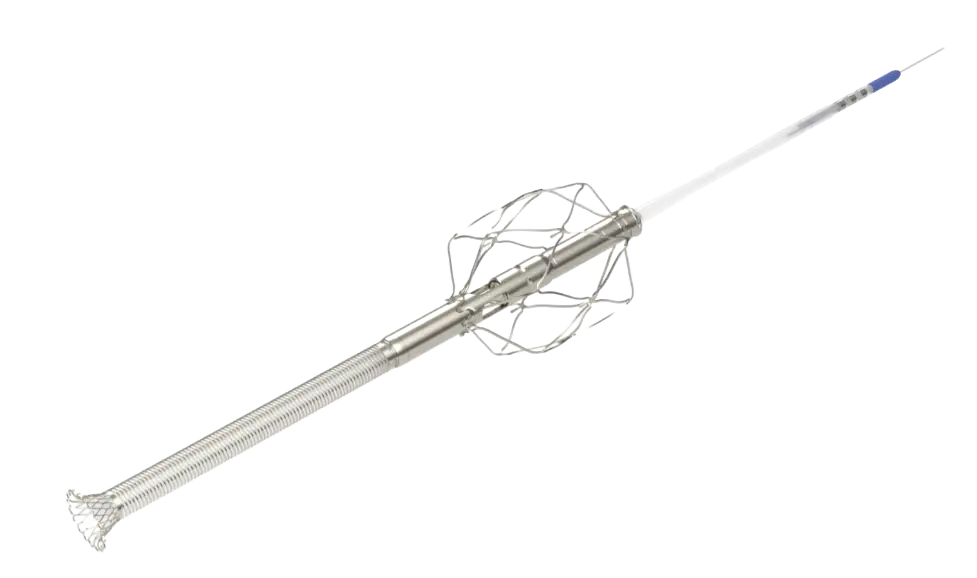
A pump
Implanted in your pulmonary artery (the vessel that carries blood to the lungs).
Figure 2: ASMA-F Pump
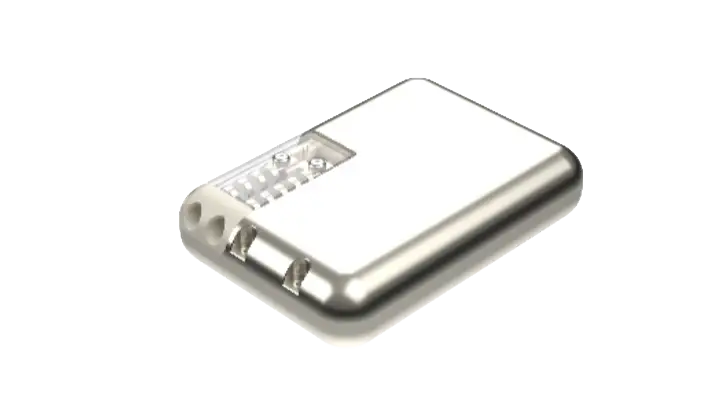
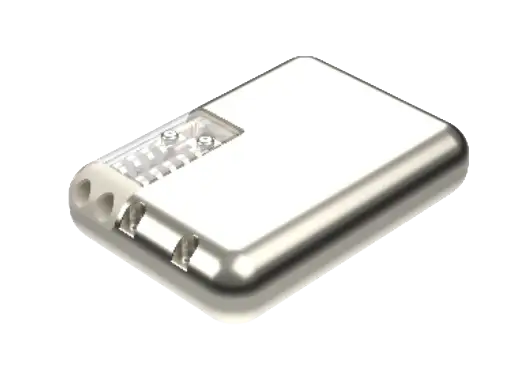
An implantable controller with internal battery
A unit placed under your skin, in the right pectoral area, near the collarbone (the horizontal bone between the shoulder and the base of the neck).
It controls and powers the pump thanks to a backup battery.
Figure 3: Implantable controller
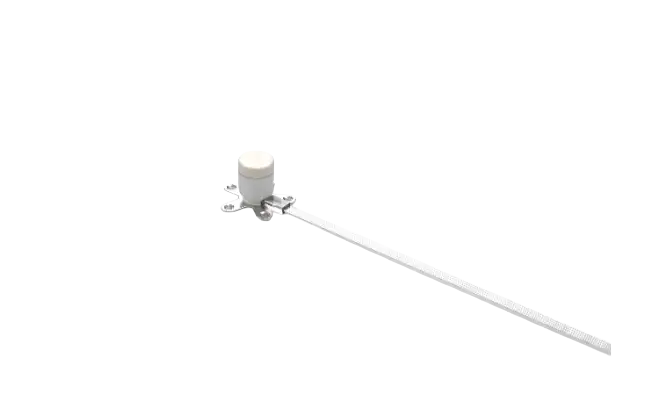
A charging connector
Placed behind your ear, on the mastoid bone (the protruding part of the skull, just behind the ear).
Figure 4: Charging connector
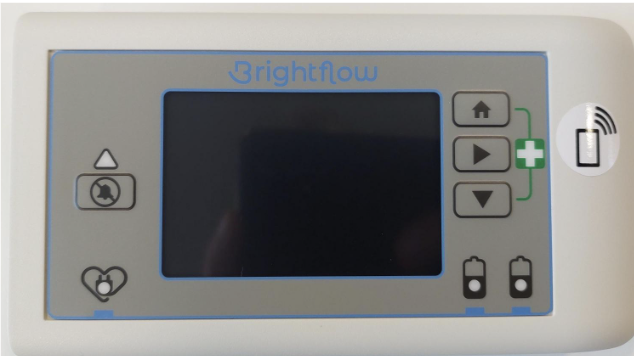
An external charger
Connected to the charging connector by a cable, it powers and recharges the controller's internal battery, which in turn powers the pump.
Figure 5: ASMA-F External charger
How does the ASMA-F pump work?
The ASMA-F pump was designed to promote blood flow to the lungs. Based on preclinical testing, it could help lower venous pressure and improve some symptoms. However, these effects have not yet been demonstrated in humans.
Implantation without opening the chest
Implantation of the ASMA-F pump is said to be percutaneous, which means that it does not require opening your chest or stopping your heart.
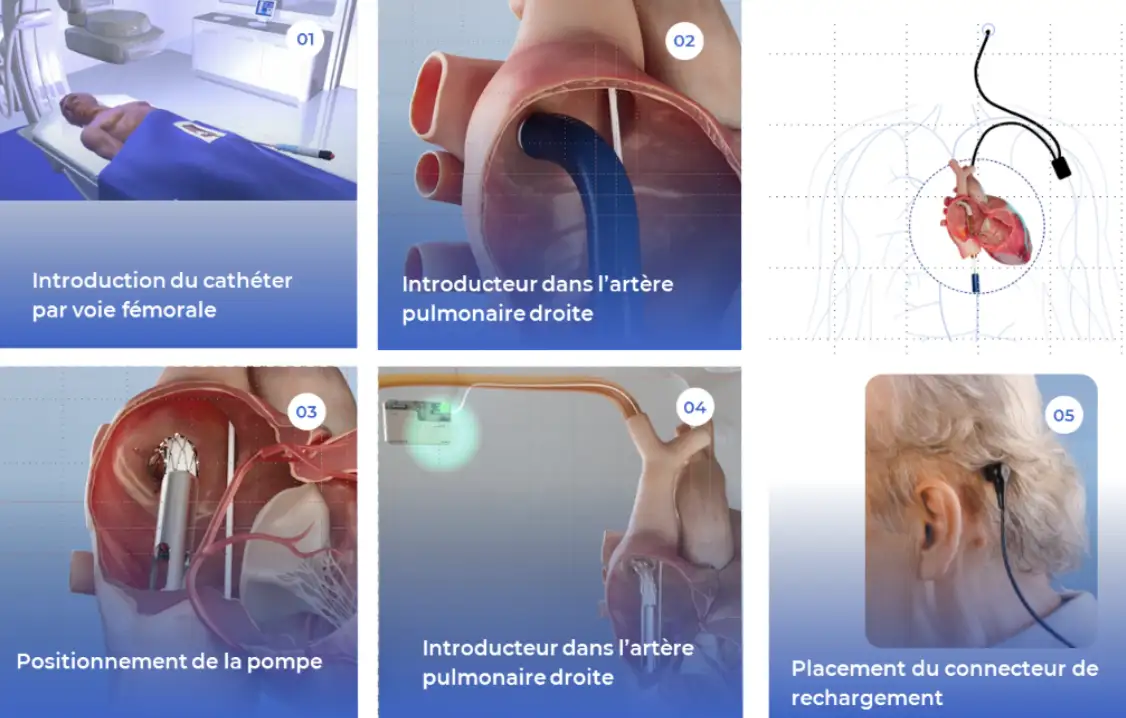
It is placed using a catheter (a thin, flexible tube) inserted through a vein in the groin, under live imaging guidance (X-rays and ultrasound performed with a probe inserted into the esophagus).
Day-to-day power supply
On a daily basis, the energy needed to run the pump is supplied by the external charger.
The internal battery is an energy reserve: it allows you to disconnect temporarily from the charger for about 30 minutes, for example to take a shower. When its charge level becomes low, an alarm warns you that you need to reconnect to the external charger.
What are the expected benefits?
The ASMA-F device could provide:
Lower pressure in your veins.
An improvement in symptoms (less shortness of breath, swelling and fatigue).
A better quality of life, with long-term support for your circulation, without a cable permanently passing through the skin (the internal battery provides about 30 minutes of autonomy).
What are the limitations of the ASMA-F device?
It is important to understand that:
The ASMA-F device is under development
It has not yet received marketing authorization or approval. Its use in your case falls under compassionate use (also called “exceptional use”), that is to say an exceptional use, supervised by the health authorities, for patients who have no other satisfactory treatment option.
If you agree, an authorization for its provision will be requested from the competent authorities before the procedure.
It has never been the subject of a clinical study in humans
The tests carried out so far have been conducted in the laboratory and in animals. They have shown that implantation is feasible, but also a probable risk of clots in the pump, which may require its removal. Reactions in humans may be different.
It does not cure your disease
The ASMA-F device is an assist solution, not a curative treatment. It can improve your symptoms, but it does not correct your heart defect.
It requires regular medical follow-up
You will need to keep follow-up appointments to check that the device is working properly and to monitor your health. You will also receive anticoagulant medications to limit the formation of clots.
Its removal is not simple
Once implanted, the pump can be removed by surgery or percutaneously, depending on the time elapsed since implantation. Removal would only be considered in specific situations, after a thorough assessment by the medical team, as it carries significant risks.
Useful resources and contacts
Your medical team
Your referring doctor is your first point of contact. Do not hesitate to contact them for:
questions about your health;
clarification about the ASMA-F device;
an opinion on treatment alternatives.
You can also request a second medical opinion, or contact the facility's patient committee for any question about your rights as a patient.
Device manufacturer: BRIGHTFLOW
For technical questions about the ASMA-F device, you can contact:
BRIGHTFLOW
Registered office: Lab'O
1 avenue du Champ de Mars
45100 Orléans – France
Patient associations
You can reach out to patient associations that offer information, guidance and support throughout your illness, in particular as part of your therapeutic education.
Your doctor can advise you and direct you to the associations best suited to your needs, especially those dedicated to congenital heart disease.
Frequently asked questions
Here you will find answers to the questions most often asked by patients and those close to them. If you cannot find the answer to your question, contact us.
Why am I being offered the ASMA-F device when it is not yet authorized?
The ASMA-F device is under development and has not yet received marketing authorization. However, in your case, the usual treatments (medications, surgery, other devices) are not suitable or sufficient.
Your medical team has judged that the ASMA-F device could represent a promising option for you, under compassionate use. This means that it is used on an exceptional basis, with the agreement of the health authorities, for patients who have no other solution.
It is never the first choice.
Has the device already been tested?
Yes, in animals, but not yet in humans.
Animal studies, including a long-term study, have shown that the implantation procedure can be performed successfully and repeatedly by different medical teams.
The risk of blood clots forming in the pump remains uncertain. This is why you will receive anticoagulant medications and close follow-up.
How long can I keep the ASMA-F device?
The ASMA-F device is designed for prolonged use, but its duration will depend on:
your clinical progress (improvement or stabilization of your condition);
the absence of complications (infection, malfunction, etc.);
the recommendations of your medical team.
This duration has not yet been evaluated in humans.
Can I live normally with the ASMA-F device?
The device was designed with the aim of improving the symptoms associated with Fontan circulation failure, but certain precautions are necessary:
Daily activities: you will be able to gradually resume your activities (walking, light household tasks), but ask your doctor for advice before any intense exertion. Contact sports must be avoided because of the risk of bleeding while on anticoagulants.
Charging: you can disconnect temporarily from the charger if needed (for example to take a shower), with an autonomy of about 30 minutes. You must then reconnect to the external charger.
Precautions: avoid any impact or pressure on the area of the controller (pectoral area) or the connector (behind the ear). Report any worrying symptom immediately (pain, bleeding, fever, abnormal shortness of breath).
Preventing infection: to avoid infecting your pump and its battery, you must have your teeth checked regularly and tell your dentist that you have a cardiac implant, as preventive antibiotic treatment is required before any dental procedure. Carefully disinfect your skin in the event of a cut or injury.
Travel: discuss with your doctor before any trip. You will need to take your charging equipment and the contact details of your follow-up center. Do not walk through magnetic security gates. You will be given an implant carrier card so that you can avoid these checks. You must carry it on you at all times.
Imaging: you must not undergo an MRI, as your pump contains magnetic material. You can, however, undergo X-ray-based examinations (CT scan, angiography and standard radiography) and ultrasounds.
Your doctor will give you personalized instructions depending on your condition.
What happens if the battery stops?
Normal use of the ASMA-F device requires the external charger to be connected continuously.
When the external charger is not plugged in, the internal battery allows you to remain independent for about 30 minutes. An alarm warns you when the battery level becomes low.
If the charger is not reconnected, the battery will eventually run out, which will cause the pump to stop.
You must therefore reconnect the device to the external charger as soon as possible and carry the charger with you at all times.
Can I take a shower or a bath with the device?
You can take a shower, but with certain precautions:
Disconnect from the external charger (autonomy of about 30 minutes) and avoid getting the charging connector wet (behind the ear).
Do not immerse yourself in water (no baths, swimming pools, sea).
Dry the area around the connector well after showering.
Your medical team will give you specific advice on hygiene with the device.
Is the ASMA-F device visible from the outside?
The ASMA-F device is designed to be as discreet as possible:
The pump is fully implanted and is not visible.
The controller is implanted under the skin and is generally not visible when you are dressed.
The charging connector, located behind the ear, is discreet but may be visible if you have short hair.
The external charger is carried in a small pouch that you must keep with you. The cable connecting the charging connector to the external charger remains visible.
Can I consider a pregnancy with the ASMA-F device?
Pregnancy with a cardiac assist device such as ASMA-F is strongly discouraged, because of:
the risks to the mother (cardiac and circulatory complications, infections);
the risks to the fetus (anticoagulant medications, strain on the circulation);
the lack of data on the safety of the device during pregnancy.
If you are a woman of childbearing age, discuss contraception with your doctor before the procedure.
What should I do in an emergency (pain, bleeding, alarm)?
In the event of a worrying symptom, act quickly and do not wait for the symptoms to get worse:
Device alarm
Check the connection to the charger and the battery level. If the alarm persists, contact your follow-up center.
Chest pain, sudden shortness of breath, feeling faint
Call the emergency services and mention that you have an ASMA-F cardiac assist system.
Bleeding or swelling at a wound
Seek urgent advice from your medical team or the nearest emergency department.
Fever or signs of infection (redness, warmth, discharge)
Contact your treating doctor or your follow-up center.
Can I undergo imaging examinations (MRI, CT scan) with the device?
You will not be able to undergo an MRI with the ASMA-F device, as the magnetic fields could damage the implanted components. For other examinations:
CT scan: possible, but always inform the medical staff of the presence of the device.
X-ray: no problem.
Ultrasound: no problem.
Always report the presence of the device before any imaging examination.
Can I travel by plane with the ASMA-F device?
Yes, but with precautions:
Consult your doctor before the trip to make sure your condition is stable.
Take all your equipment (charger, implant carrier card).
Inform the airline of the presence of an implanted medical device (some airlines may request a medical certificate).
Avoid long trips without medical assistance nearby.
Provided these instructions are followed, the ASMA-F device does not pose a safety problem on a plane (no risk to other passengers).
Can I have the pump removed if I change my mind?
You may withdraw your consent to continuing this treatment at any time, without having to justify yourself and without any consequence for your care.
However, this does not mean that the pump can simply be removed. Once implanted, it can only be removed by surgery, which would carry significant risks, sometimes greater than the expected benefits of removal.
Removal would therefore only be considered in specific situations, after a thorough assessment by the medical team. If you express the wish to stop this treatment, your situation will be discussed with you in order to determine the most appropriate solution.
Contact
For any question about the device, your health or your treatment, your doctor remains your first point of contact.
A website dedicated to information on severe right heart failure and the ASMA-R device.
Welcome
The purpose of this website is to inform you, and those close to you, about:
Your medical condition: severe right heart failure.
The available treatments and their limitations.
The ASMA-R device, how it works, its expected benefits and its risks.
Your rights as a patient and the steps of your care.
Understanding my right heart failure
Right heart failure is a condition in which the right side of your heart is no longer able to pump enough blood to your lungs for it to be oxygenated.
This leads to a build-up of blood in the veins and organs, which can cause troublesome symptoms and impair your quality of life.
Why does this happen?
The heart is made up of two parts:
The left heart: pumps oxygenated blood to the whole body.
The right heart: pumps oxygen-poor blood to the lungs so that it can be oxygenated.
When the right heart is weakened (for example because of a lung disease, left heart failure, or a right ventricular infarction), it can no longer perform its role properly.
Blood then builds up in the veins, causing congestion (swelling, shortness of breath, severe fatigue).
What are the symptoms?
The most common symptoms include:
Swelling (edema): especially in the legs and ankles.
Rapid weight gain: due to water retention.
Shortness of breath: even at rest or with minimal exertion.
Severe fatigue: a feeling of lacking energy.
Loss of appetite, nausea or vomiting: related to congestion of the liver and stomach.
Abdominal pain: caused by the build-up of fluid in the abdomen (ascites).
What are the causes?
Several conditions can lead to right heart failure, in particular:
Left heart failure: the left heart no longer pumps enough, which increases pressure in the lungs and strains the right heart.
Pulmonary arterial hypertension (PAH): excessively high pressure in the arteries of the lungs forces the right heart to work harder.
A right ventricular infarction: part of the right heart muscle is damaged.
A heart valve disease (e.g. tricuspid valve leakage).
Several options exist to treat right heart failure.
Your doctor has assessed that these treatments are not sufficient in your case. Here is an overview of the available solutions and their limitations.
1. Drug treatments
Diuretics
Objective
To reduce the build-up of fluid in the body (edema, ascites).
Example
Furosemide, spironolactone.
Medications to improve heart contraction
Objective
To help the heart pump more effectively.
Example
Dobutamine, milrinone (in a hospital setting).
2. Interventional treatments
Temporary assist devices (e.g. Impella RP, ECMO)
Objective
To temporarily take over the function of the right heart in the event of acute failure.
Cardiac surgery (e.g. transplant, biventricular assist)
Objective
To replace the heart or support both ventricles in the event of severe failure.
Why are these treatments not sufficient in my case?
Your doctor has determined that:
Drug treatments have not been able to improve your condition sufficiently.
Temporary devices (such as the Impella RP or ECMO) cannot be used long enough for your situation.
Open-heart surgery (transplant or conventional assist) would carry risks that are too high for you (because of your age, your general condition or other health problems).
This is why an alternative solution, the ASMA-R device, is being offered to you.
The ASMA-R device
The ASMA-R device is a mechanical right heart assist system developed by BRIGHTFLOW.
It is designed to support the work of your right heart when it is no longer able to pump enough blood to your lungs.
What does the device look like?
The ASMA-R system consists of:
A pump
Implanted in your right pulmonary artery (the vessel leading to the lungs).
Figure 1: ASMA-R Pump
An internal battery
Placed under the skin, at the level of the collarbone (the horizontal bone between the shoulder and the neck).
Placed behind your ear, on the mastoid bone (the protruding part of the skull).
An external charger
Carried in a small pouch, connected to the charging connector by means of a power cable.
Figure 3: ASMA-R External Charger
A mini data-transfer tablet
Which you will need to keep charging at your home (or temporary place of residence).
How does it work?
The ASMA-R pump helps your right heart pump blood to the lungs, which:
reduces the effort required from your heart;
improves blood circulation and the oxygenation of your body;
can relieve your symptoms (shortness of breath, swelling, fatigue).
Unlike open-heart surgery, implantation of the ASMA-R pump does not require opening your chest. It is placed using a catheter (a thin, flexible tube) inserted through a vein in the groin, under live imaging guidance (X-rays and ultrasound).
What are the expected benefits?
The hoped-for benefits of the ASMA-R device include:
An improvement in your symptoms (less shortness of breath, less swelling).
A better quality of life (more energy, fewer limitations in your activities).
Long-term support for your right heart, without the need for permanent external cables (the internal battery provides about 30 minutes of autonomy).
What are the risks?
Any medical procedure carries risks. Implantation of the ASMA-R device can lead to serious, even fatal, complications.
Your medical team will do everything possible to prevent and treat them, but it is important that you are informed of the possible risks.
Risks related to the procedure
During or after placement of the device, the following complications may occur:
General complications
Infection (at the wound or the device).
Bleeding (sometimes requiring a transfusion).
Allergic reaction to the products used (e.g. contrast agent for X-rays).
Breathing problems or lung failure.
Cardiac complications
Cardiac arrest or rhythm disorders.
Injury to the heart or blood vessels.
Formation of clots (thrombi) in the pump or the vessels.
Displacement or malfunction of the pump.
Complications related to the device
Malfunction of the pump or the battery.
The need to remove the device urgently.
Charging problems (leading to the pump stopping).
This list is not exhaustive. Other risks, still unknown, could occur because the device has not yet been used in humans.
What are the limitations of the ASMA-R device?
It is important to understand that:
The ASMA-R device is under development
It has not yet received marketing authorization in Europe or elsewhere. Its use in your case falls under compassionate use (or “compassionate case”), that is to say an exceptional use for patients who have no other satisfactory treatment option.
It has never been tested in humans as part of a clinical investigation
The tests carried out so far have been conducted in the laboratory and on animals, with positive results. However, reactions in humans may be different.
It does not cure your disease
The ASMA-R device is an assist solution, not a curative treatment. It can improve your symptoms, but it does not address the cause of your heart failure.
It requires regular medical follow-up
You will need to keep follow-up appointments to check that the device is working properly and to monitor your health. You will also receive anticoagulant medications to prevent the formation of clots.
The procedure and follow-up
If you agree to the implantation of the ASMA-R device, here are the steps you will go through, from preparation to recovery.
Before the procedure
Complete medical assessment
Your medical team has already carried out a complete assessment to confirm that you are eligible for implantation of the ASMA-R device. This assessment includes:
a clinical examination (medical history, symptoms, vital signs);
blood tests;
imaging examinations (echocardiography, CT scan, MRI if necessary);
an evaluation of your general condition (liver, kidneys, lungs).
Discussion with your doctor
You will be provided with an information document. A doctor will go over each point of this document with you during a one-to-one discussion.
You will be able to ask all your questions and discuss:
the expected benefits;
the possible risks and complications;
the treatment alternatives;
practical arrangements (length of the hospital stay, post-operative follow-up).
You will be given time to think things over before making your decision.
Signing the informed consent
If you agree to the procedure, you will sign a consent form. This document attests that:
you have been informed of the objectives, the benefits and the risks;
you understand that your participation is voluntary;
you may withdraw your consent at any time, without justification and without any consequence for your care.
During the procedure
The procedure takes place under general anesthesia: you will be asleep and will feel no pain. Here are the main steps:
Figure 4: Steps of the implantation
Preparation: you will be settled in the operating room and prepared for the procedure (disinfection, placement of catheters, monitoring).
Live examination of the heart: a transesophageal echocardiography (a probe inserted into the esophagus) will allow your heart to be visualized during the procedure.
Access to the heart through a vein in the groin: the doctor will insert a catheter (a thin tube) through a vein in the groin and guide it to the right heart.
Creating a connection between two vessels: a small opening will be made in the wall of two large vessels near the heart (the superior vena cava and the right pulmonary artery) to position the pump.
Placement of the pump: the pump will be brought along the same path and positioned in the right pulmonary artery. The cable connecting the pump to the battery will be connected to the battery implanted under the collarbone. The charging connector will be placed behind your ear.
Checking that it works properly: the pump will be tested using ultrasound and X-rays.
Closure: the introduction system will be removed, and the vein in the groin will be closed.
Duration of the procedure
Several hours (varies depending on the case).
Presence of the team
Representatives of the manufacturer (BRIGHTFLOW) will be present to prepare the device and provide their technical expertise. They are not involved in medical decisions, which are the sole responsibility of your care team.
After the procedure
Waking up and monitoring in intensive care
You will be transferred to an intensive care unit for close monitoring (heart rate, blood pressure, pump function). The length of the stay in intensive care depends on your condition.
Start of rehabilitation
As soon as your condition allows, you will begin cardiac rehabilitation in order to:
gradually regain your independence;
learn to live with the device (charging the battery, managing alarms);
strengthen your physical condition.
Learning to manage the device
You and those close to you will receive training on:
keeping the battery constantly charged (mandatory to prevent the pump from stopping);
recognizing the alarms (e.g. low battery);
the signs to watch for (fever, bleeding, abnormal shortness of breath);
the medications to take (anticoagulants to prevent clots).
Returning home
Once you are stable, you will be able to return home. You will need to:
keep your follow-up appointments (regular checks of the pump and of your health);
always carry the external charger with you;
avoid any impact or pressure on the area of the battery or the connector;
report any worrying symptom to your medical team immediately.
Long-term follow-up
Follow-up after implantation of the ASMA-R device includes:
Regular medical visits: to check that the pump is working properly, adjust your medications and assess your general condition.
Additional examinations: echocardiograms, blood tests, X-rays if necessary.
Management of complications: in the event of a problem (infection, malfunction, etc.), your medical team will act quickly.
Duration of follow-up: the ASMA-R device is designed for prolonged use, but its duration will depend on your clinical progress.
My rights and useful resources
As a patient, you have rights and resources to support you throughout your care. This section explains your rights and provides you with useful contacts.
My rights as a patient
The right to information
You have the right to receive clear, honest and appropriate information about:
your health;
the treatments offered (benefits, risks, alternatives);
the results of examinations and procedures.
Your doctor is there to answer all your questions. Do not hesitate to ask for clarification if anything is unclear.
The right to free and informed consent
Your consent is mandatory for implantation of the ASMA-R device. This means that:
you accept or refuse the procedure without any pressure;
you may withdraw your consent at any time, without having to justify yourself;
your refusal or withdrawal of consent will have no consequence for the quality of your medical care.
The right to confidentiality and data protection
Your medical data is protected by law. Here is how it is processed in connection with the use of the ASMA-R device:
Data collection
Information about your health and your tolerance of the device will be recorded in your medical file.
Data transmission
Certain pseudonymized data (without your name or your address) may be transmitted:
to the manufacturer (BRIGHTFLOW) to improve the device;
to the health authorities (e.g. the ANSM in France) for monitoring the safety of the device.
Data retention
Your data will be kept for at least 15 years after implantation, in accordance with regulations.
Your rights
At any time, you may:
access your data;
request that it be corrected or deleted (subject to legal obligations);
object to its processing (subject to the exceptions provided for by law).
To exercise these rights, contact your doctor or the Data Protection Officer (DPO) of the healthcare facility.
The right to care without additional cost
The ASMA-R device is provided to you free of charge by the manufacturer (BRIGHTFLOW). You will have no additional costs to pay for:
implantation of the device;
the examinations and follow-up related to its use.
You will not receive any financial compensation for your participation.
The right to insurance in the event of harm
Although every precaution is taken to minimize the risks, complications may occur. In the event of harm related to the device:
you will receive all necessary care, including emergency care;
the manufacturer (BRIGHTFLOW) has taken out civil liability insurance, as for any authorized medical device.
Useful resources and contacts
Your medical team
Your referring doctor is your first point of contact. Do not hesitate to contact them for:
questions about your health;
clarification about the ASMA-R device;
an opinion on treatment alternatives.
Device manufacturer: BRIGHTFLOW
For technical questions about the ASMA-R device, you can contact:
BRIGHTFLOW
Registered office: Lab'O, 1 avenue du Champ de Mars, 45100 Orléans – France
Offices: 7 rue Watt, 75013 Paris – France
Tel: +33 1 79 35 22 04 brightflow.com/contact
Patient associations
You can reach out to patient associations that offer information, guidance and support throughout your illness, in particular as part of your therapeutic education.
Your doctor can advise you and direct you to the associations best suited to your needs.
Frequently asked questions
Here you will find answers to the questions most often asked by patients and those close to them. If you cannot find the answer to your question, contact us.
Why am I being offered the ASMA-R device when it is not yet authorized?
The ASMA-R device is under development and has not yet received marketing authorization. However, in your case, the usual treatments (medications, other devices) are not suitable or sufficient.
Your doctor has judged that the ASMA-R device could represent a promising option for you, under compassionate use. This means that it is used on an exceptional basis for patients who have no other solution.
How long can I keep the ASMA-R device?
The ASMA-R device is designed for prolonged use, but its duration will depend on:
your clinical progress (improvement or stabilization of your condition);
the absence of complications (infection, malfunction, etc.);
the recommendations of your medical team.
In theory, it could remain in place for several months, but this has not yet been evaluated in humans.
Can I live normally with the ASMA-R device?
The ASMA-R device is designed to allow you to regain a better quality of life, but certain precautions are necessary:
Daily activities: you will be able to gradually resume your activities (walking, light household tasks), but avoid intense exertion or contact sports.
Charging the battery: you can disconnect temporarily if needed (for example to take a shower), with an autonomy of about 30 minutes. However, the external charger must be kept plugged in.
Precautions: avoid any impact or pressure on the area of the battery (collarbone) or the connector (behind the ear). Report any worrying symptom immediately to your treating doctor or any healthcare professional (pain, bleeding, fever, abnormal shortness of breath).
Travel: discuss with your doctor before any trip. You will need to take your charging equipment and the contact details of your follow-up center. You will be given an international implant card. You must carry it on you at all times.
Your doctor will give you personalized instructions depending on your condition.
What happens if the battery stops?
Normal use of the ASMA-R device requires the external charger to be connected continuously.
When the external charger is not plugged in, the internal battery of the ASMA-R device allows you to remain independent for about 30 minutes. An alarm will warn you when the battery level becomes low.
If the charger is not reconnected, the battery will eventually run out, which will cause the pump to stop.
You must therefore keep the ASMA-R device connected to the external charger whenever possible and carry the charger with you at all times.
Can I take a shower or a bath with the device?
Yes, you can take a shower, but with certain precautions:
Avoid getting the charging connector wet (behind the ear).
Do not immerse yourself in water (no baths, swimming pools, sea).
Dry the area around the connector well after showering.
Your medical team will give you specific advice on hygiene with the device.
Is the ASMA-R device visible from the outside?
The ASMA-R device is designed to be as discreet as possible:
The pump is fully implanted in the heart and is not visible.
The battery is implanted under the skin and is generally not visible when you are dressed.
The charging connector, located behind the ear, is discreet but may be visible if you have short hair.
The external charger is carried in a small pouch that you must keep with you. The cable connecting the charging connector to the external charger nevertheless remains visible.
You can therefore wear your usual clothing without the device being visible.
Can I have children or become pregnant with the ASMA-R device?
Pregnancy with a cardiac assist device such as ASMA-R is not recommended because of:
the risks to the mother (cardiac complications, infections);
the risks to the fetus (anticoagulant medications, physiological stress);
the lack of data on the safety of the device during pregnancy.
If you are a woman of childbearing age, discuss contraception with your doctor.
What should I do in an emergency (pain, bleeding, alarm)?
In the event of a worrying symptom, act quickly:
Device alarm
Check the battery level and recharge it. If the alarm persists, contact your follow-up center.
Chest pain, sudden shortness of breath, feeling faint
Call 15 (SAMU) or 112 (the European emergency number) and mention that you have a ventricular assist device (a heart pump).
Bleeding or swelling at the wound
Seek urgent advice from your medical team or the nearest emergency department.
Fever or signs of infection (redness, warmth, discharge)
Contact your treating doctor or your follow-up center.
Can I undergo imaging examinations (MRI, CT scan) with the device?
You will not be able to undergo an MRI with the ASMA-R device, as the magnetic fields could damage the implanted devices. For other examinations:
CT scan: possible, but always inform the medical staff of the presence of the device.
X-ray: no problem.
Ultrasound: no problem.
Precautions: always report the presence of the device before any imaging examination.
Can I travel by plane with the ASMA-R device?
Yes, but with precautions:
Consult your doctor before the trip to make sure your condition is stable.
Take all your equipment (charger, spare batteries if available, carrier card).
Inform the airline of the presence of an implanted medical device (some airlines may request a medical certificate).
Avoid long trips without medical assistance nearby.
For air travel, the ASMA-R device does not pose a security problem (no risk to other passengers).
Contact us
Your referring doctor remains your first point of contact. For technical questions about the ASMA-R device: